Product Introduction
Application case
 |  |  |
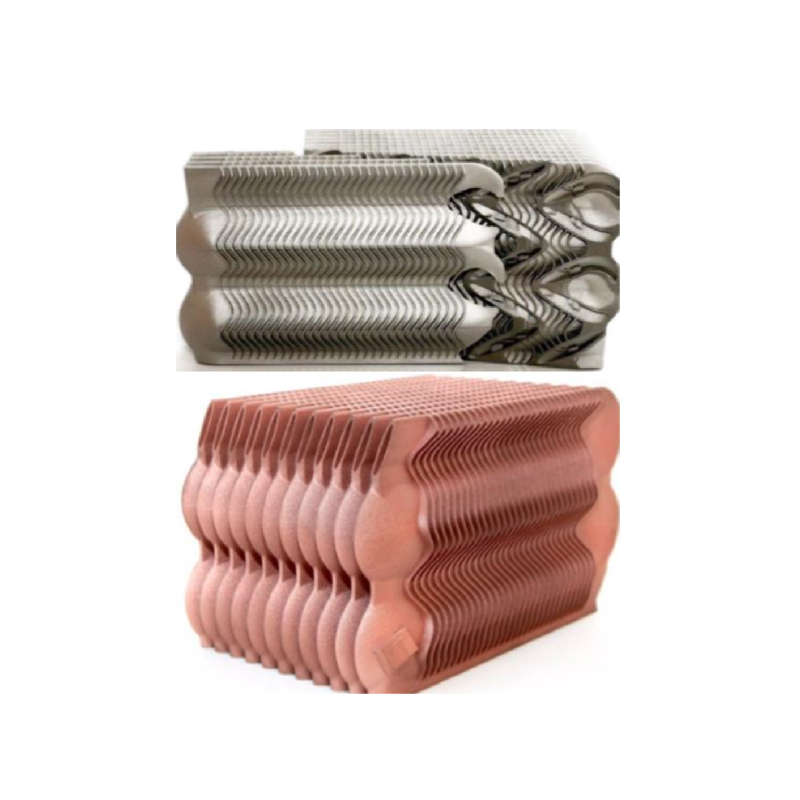
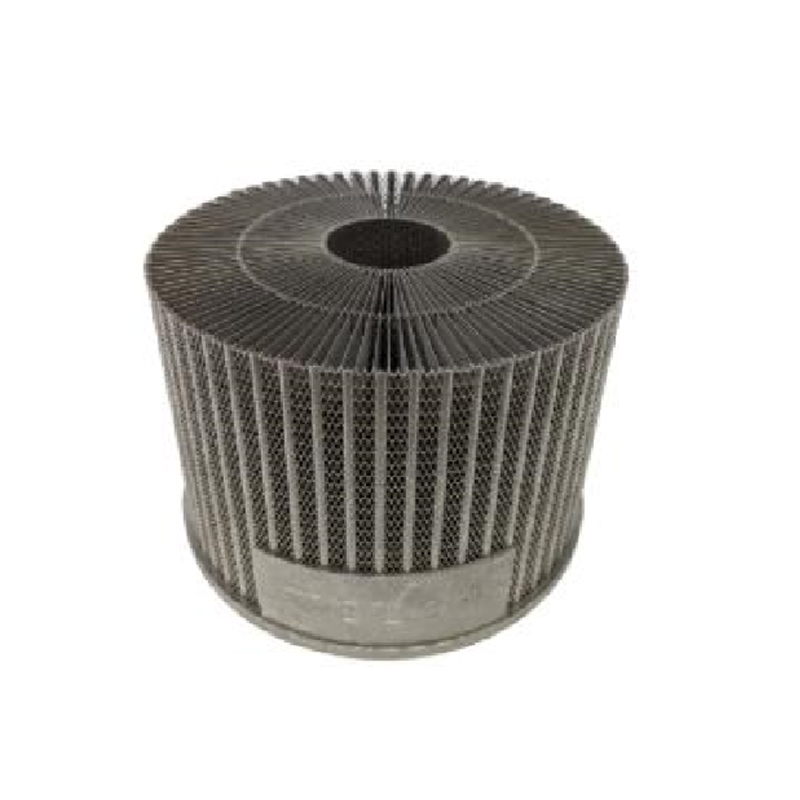
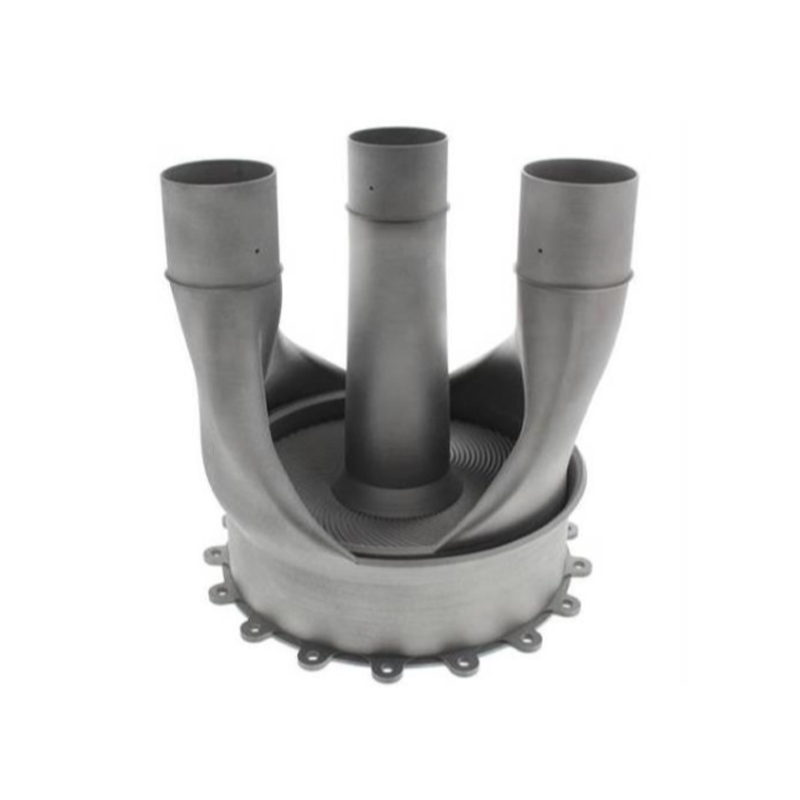
| heat exchanger | heat exchanger | Helical Heat Exchanger |
 |  |  |
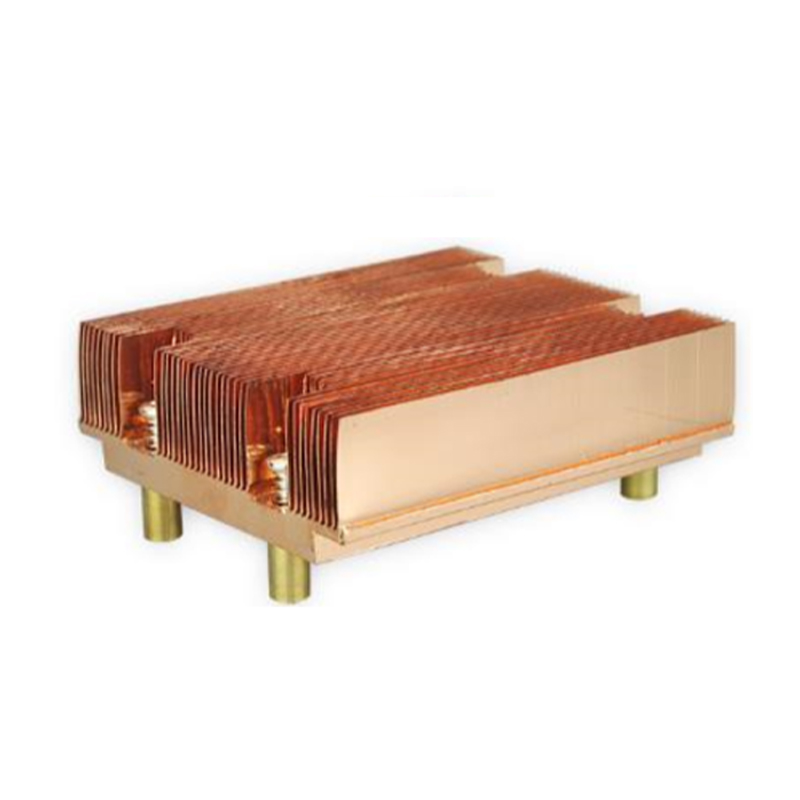
| radiator | Localized Heat Sink Zone | Micro Heat Sink |
Industry Introduction
Within the domain of heat sink applications, metal additive manufacturing affords designers exceptional design freedom and facilitates transformative advancements in weight reduction, volume minimization, performance enhancement, and efficiency improvement. Metal additive manufacturing technology has been extensively adopted in the fabrication of heat sinks. Compared with conventionally manufactured counterparts, heat sinks produced via metal additive manufacturing exhibit consistent reductions exceeding 80% in weight, volume, and manufacturing lead time, coupled with a reduction in production costs of more than 50%, all while achieving the dual objectives of lightweight construction and high performance. By leveraging metal additive manufacturing, optimized heat sink designs can be realized through integrated, monolithic fabrication, enabling accelerated iterative development and low-cost production that balances both manufacturing efficiency and economic viability.
Advantages of Metal 3D Printing
1. Lightweight Design: Optimizing component design and process architecture achieves lightweighting of parts in the heat exchanger sector.
2. Cost Reduction: Substantially shortening component development cycles and effectively reducing resource consumption in heat exchanger systems, thereby enhancing economic efficiency.
3. Performance Enhancement: Utilizing high-performance materials endows heat exchangers, reactors, and related components with exceptional high-temperature resistance, extending equipment service life and significantly improving operational efficiency and performance metrics.
2. Cost Reduction: Substantially shortening component development cycles and effectively reducing resource consumption in heat exchanger systems, thereby enhancing economic efficiency.
3. Performance Enhancement: Utilizing high-performance materials endows heat exchangers, reactors, and related components with exceptional high-temperature resistance, extending equipment service life and significantly improving operational efficiency and performance metrics.
The working principle of SLM metal 3D printing
Using metal powder as raw material, the 3D model data is sliced in the Z direction into two-dimensional planar graphics. The two-dimensional planar graphics are sintered and formed on the powder bed by controlling the laser path with a galvanometer, and then the two-dimensional graphics are stacked to form a three-dimensional part.

SLM Metal 3D Printing Materials and Properties(as-heat-treated condition)
| Material type | Material designation | Tensile Strength / MPa | Yield Strength/MPa | Ductility/% | ||
| X-axis and Y-axis direction | Z-axis direction | X-axis and Y-axis direction | Z-axis direction | |||
| Aluminium alloy | AlSi10Mg | 456±30 | 440±30 | 311±30 | 270±30 | 8±2 |
| AlSi7Mg | 424±20 | 405±20 | 289±20 | 262±20 | ≥7 | |
| aldural | 541±15 | 515±15 | 520±15 | 475±30 | ≥10 | |
| Titanium alloy | TC4 | 1040±90 | 1050±90 | 980±90 | 1000±90 | 14±4 |
| TA15 | 1118±100 | 1142±100 | 1064±100 | 1118±100 | 12±4 | |
| Stainless steel | 316L | 678±20 | 650±20 | 427±30 | 418±30 | 51±10 |
| 304L | 600±50 | 597±50 | 353±20 | 352±20 | 55±10 | |
| 4J36 | 550±50 | 530±50 | 492±50 | 472±50 | 34 | |
| 17-4PH | 1110±50 | 1109±50 | 1073±50 | 1046±50 | ≥15 | |
| Die steel | MS1(1.2709/18Ni300) | 1833±50 | 1805±50 | 1772±50 | 1739±50 | ≥7 |
| High temperature alloy | GH4169(In718) | 1400±50 | 1250±50 | 1250±50 | 1250±50 | 9~20 |
| GH3625 | 900±50 | 850±50 | 410±50 | 390±50 | ||
| GH5188 | 954±20 | 888±20 | 449±20 | 441±20 | 64±10 | |
| GH3536 | 878±50 | 885±50 | 548±30 | 549±30 | 37±10 | |
| GH4099 | 1215±50 | 1170±50 | 1047±50 | 988±50 | 30±5 | |
模具生产效率问