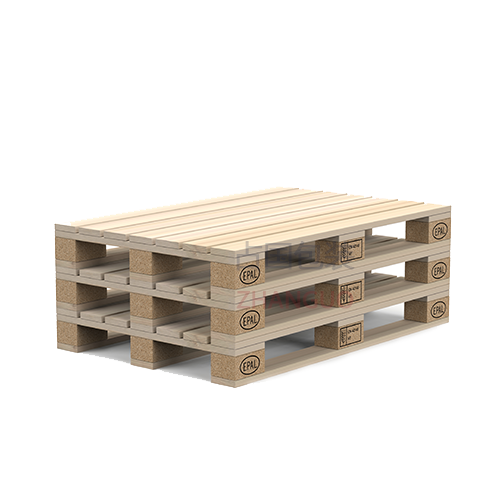
Q1: Are your pallets compliant with international export standards (ISPM15)?
Yes. All our wooden pallets for export undergo Heat Treatment (HT) or fumigation and are stamped with the internationally recognized IPPC mark (including country code, treatment method, producer code, etc.). They fully comply with ISPM15 standards and are suitable for global trade.
Q2: What are the common pallet sizes and load capacities?
Standard Sizes (customizable upon request):
Euro Pallet: 1200mm × 800mm
US Pallet: 1200mm × 1000mm
Japanese Pallet: 1100mm × 1100mm
Dynamic Load (during handling): Typically 0.5 - 1.5 tons
Static Load (when stacked): Typically 3 - 5 tons
(Actual capacity depends on pallet structure, wood type, and reinforcement.)
Q3: How do I choose the right type of pallet for my needs?
Consider the following when selecting pallets:
Usage Scenario:
Export shipping → Choose IPPC-treated pallets.
Indoor storage → Opt for more cost-effective non-treated pallets.
Cargo Characteristics:
Heavy goods → Choose thick-plank, reinforced (with metal components) or double-deck pallets.
Automated warehouses → Select pallets with bottom structures compatible with forklifts and pallet jacks (four-way entry).
Industry Practices: Different countries/industries have default size standards. Confirm requirements in advance.
Q4: How can I maintain pallets to extend their service life?
Proper Use: Avoid overloading or point-loading; align forklift tines with entry points during handling.
Regular Inspection: Promptly replace broken or loose boards or nails.
Storage Environment: Store in a dry, ventilated area. For long-term outdoor storage, use preservative-treated wood or cover with waterproof tarps.
Q5: Can damaged pallets be recycled or repaired?
We offer pallet repair services: damaged components can be replaced at a cost significantly lower than purchasing new pallets. Severely damaged pallets can also be traded in for recycling, supporting the circular economy.
Q6: What are the advantages of wooden pallets compared to plastic/metal pallets?
Cost-Effective: Lowest initial purchase cost.
Easy Repair: Localized damage can be quickly fixed.
Eco-Friendly & Renewable: Wood comes from sustainable forests; discarded pallets are biodegradable or can be used as fuel.
Good Anti-Slip Properties: Wooden surfaces offer high friction, preventing cargo from sliding.
Q7: Can pallets be used with automated packaging lines?
Yes. We can customize pallets with high precision and low tolerance (±2mm) and optimize the bottom structure to ensure smooth operation on conveyor systems.