Essential details
MOQ:Min. Order: 2 piece
Shipping:Land freight, Ocean freight
Product Introduction
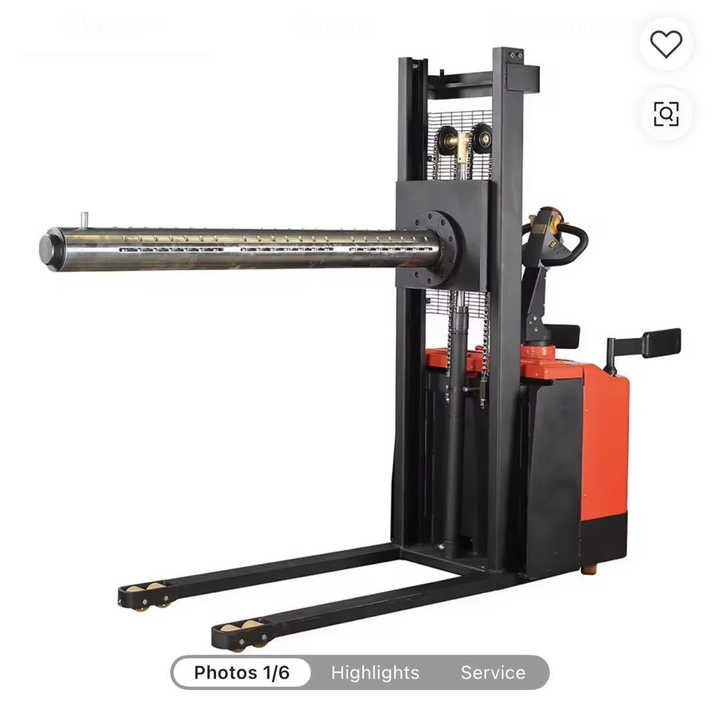
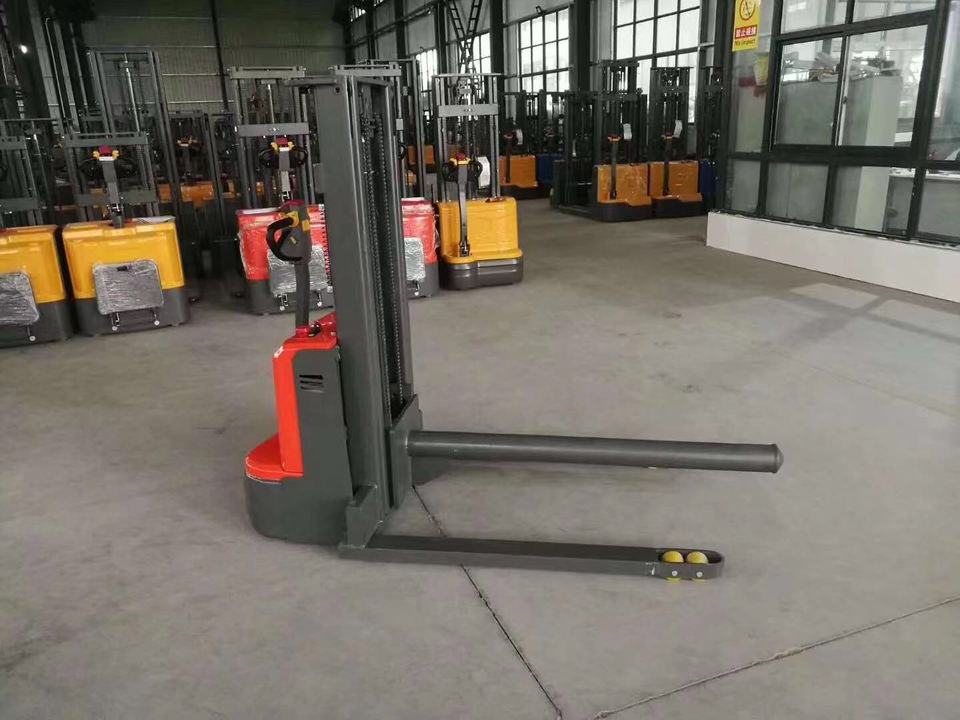
JXFORKLIFT’s Fully Electric Pole-Type Stacker is engineered to lift cylindrical goods (e.g., yarn spools, paper rolls, cable reels) by inserting sturdy metal poles through their central holes. It uses full electric power for both movement and lifting—eliminating manual effort while ensuring loads stay stable (no rolling or slipping).
Built with a compact frame, IP44 dust/water resistance, and adjustable pole collars, it balances efficiency and load safety, ideal for industries needing specialized handling for hole-centered cylindrical items.
Key Specifications
| Specification | Details |
|---|---|
| Load Capacity | 1.0–2.0 Tons (2,205–4,409 lbs) |
| Lifting Height | 3.0–6.0 Meters (9.8–19.7 ft) |
| Pole Specifications | Diameter: 50–100 mm (fits 60–110 mm central holes); Length: 1.2–2.0 Meters (customizable) |
| Battery Type | 48V Lithium-Ion (removable; 3,000+ charge cycles) |
| Charging Time | 4–6 hrs (Standard Charger); 2–3 hrs (Fast Charger) |
| Runtime per Charge | 6–8 hrs (25–35 load cycles) |
| Travel Speed | 3.0 km/h (Forward); 2.5 km/h (Reverse) |
| Turning Radius | ≤2.5 Meters |
| Safety Features | Overload protection, emergency stop, adjustable pole collars, anti-rollback brake |
Ideal Usage Scenarios
- Textile Mills: Handling yarn spools and fabric rolls between storage and weaving/knitting machines.
- Paper/Packaging Plants: Stacking paper rolls or cardboard cores on high racks.
- Cable/Wire Factories: Moving cable reels or wire spools to production lines or shipping docks.
- Plastic/Rubber Industries: Lifting plastic tubes or rubber rolls with central holes in narrow aisles.
Why Choose JXFORKLIFT?
- Specialized Load Security: Poles through central holes + adjustable collars prevent slipping/rolling—no load damage.
- Full Electric Efficiency: Cuts task time by 60% vs. manual handlers; no fuel costs or emissions.
- Space-Saving Design: Narrow width (800–1,000 mm) and tight turning radius fit 2.0–2.2m aisles.
- Customizable: Interchangeable poles for different hole sizes; tailored options for non-standard loads.
Need a reliable solution for hole-centered cylindrical goods? Contact JXFORKLIFT for quotes or custom pole specifications. Global shipping available.
A: JXFORKLIFT’s fully electric pole-type stacker features long, sturdy metal poles (instead of traditional forks) that insert directly through the central holes of cylindrical goods (e.g., paper rolls, yarn spools, cable reels). It uses full electric power for both pole lifting/lowering and machine movement—securing loads via the central hole to prevent rolling, slipping, or damage, even during high lifts.
2. What load capacities and pole specifications does it offer?
A: Standard models support 1.0–2.0 tons (2,205–4,409 lbs). Pole specifications are tailored to cylindrical goods:
- Pole diameter: 50–100 mm (fits common central hole sizes of 60–110 mm).
- Pole length: 1.2–2.0 meters (accommodates long cylindrical goods like 1.5m paper rolls).
Custom pole sizes (diameter/length) are available for non-standard central holes.
3. How does it ensure cylindrical goods stay secure on the pole during lifting/movement?
A: It uses two key security features:
- Adjustable pole collars: Slidable rings that lock against the bottom of the cylindrical load, preventing downward slippage.
- Stable lifting alignment: The electric hydraulic system lifts the pole vertically (no tilting), keeping the load centered on the pole—critical for tall or heavy cylindrical goods.
4. What’s the maximum lifting height, and can it reach high racking?
A: Maximum lifting height ranges from 3.0–6.0 meters (9.8–19.7 ft)—ideal for stacking cylindrical goods on high warehouse racks (common in textile, paper, or cable industries). The electric lifting system ensures smooth, precise height control for accurate rack placement.
5. How long does the battery last per charge, and how is it charged?
A: Runtime is 6–8 hours (supports 25–35 load cycles, e.g., moving yarn spools from storage to production lines). It uses a 48V lithium-ion battery with two charging options:
- Standard AC charger: Full charge in 4–6 hours (for off-shift charging).
- Fast charger: Full charge in 2–3 hours (for quick top-ups during shift changes).
Batteries have a 3,000+ charge cycle life (4–5 years of regular use).
6. Can it handle cylindrical goods with different central hole sizes or lengths?
A: Yes. It offers interchangeable poles (50–100 mm diameter) to fit varying central hole sizes—swapped in 5–10 minutes with no special tools. For longer cylindrical goods (up to 2.0m), extended-length poles are available; the machine’s width (≤1.0m) also fits narrow aisles to maneuver long loads easily.
7. Is it suitable for narrow aisles in warehouses with dense storage?
A: Absolutely. It has a compact design with a turning radius of ≤2.5 meters and overall width of 800–1,000 mm—able to operate in aisles as narrow as 2.0–2.2 meters. This makes it perfect for warehouses with high-density racking for cylindrical goods.
8. What safety features does it include for operators and loads?
A: Key safety features:
- Overload protection: Stops lifting if the load exceeds capacity (prevents pole bending or machine damage).
- Emergency stop button: Cuts power to all functions instantly in case of issues.
- Anti-rollback brake: Locks the machine in place when stopped on slight slopes (avoids load movement).
- Pole collision guards: Protect the poles from damage during maneuvering.
9. What maintenance is required to keep it running reliably?
A: Minimal upkeep (vs. manual stackers):
- Check battery charge and connections daily.
- Inspect pole collars and pole surface (for wear) weekly.
- Lubricate lifting gears and pole adjustment mechanisms monthly.
- Clean the hydraulic system (to remove dust/debris) quarterly.
No engine oil changes or fuel maintenance—saves time and cost.
10. Which industries benefit most from this pole-type stacker?
A: It’s ideal for industries handling hole-centered cylindrical goods:
- Textile mills: Yarn spools and fabric rolls.
- Paper/packaging plants: Paper rolls and cardboard cores.
- Cable/wire factories: Cable reels and wire spools.
- Plastic/rubber industries: Plastic tubes and rubber rolls with central holes.