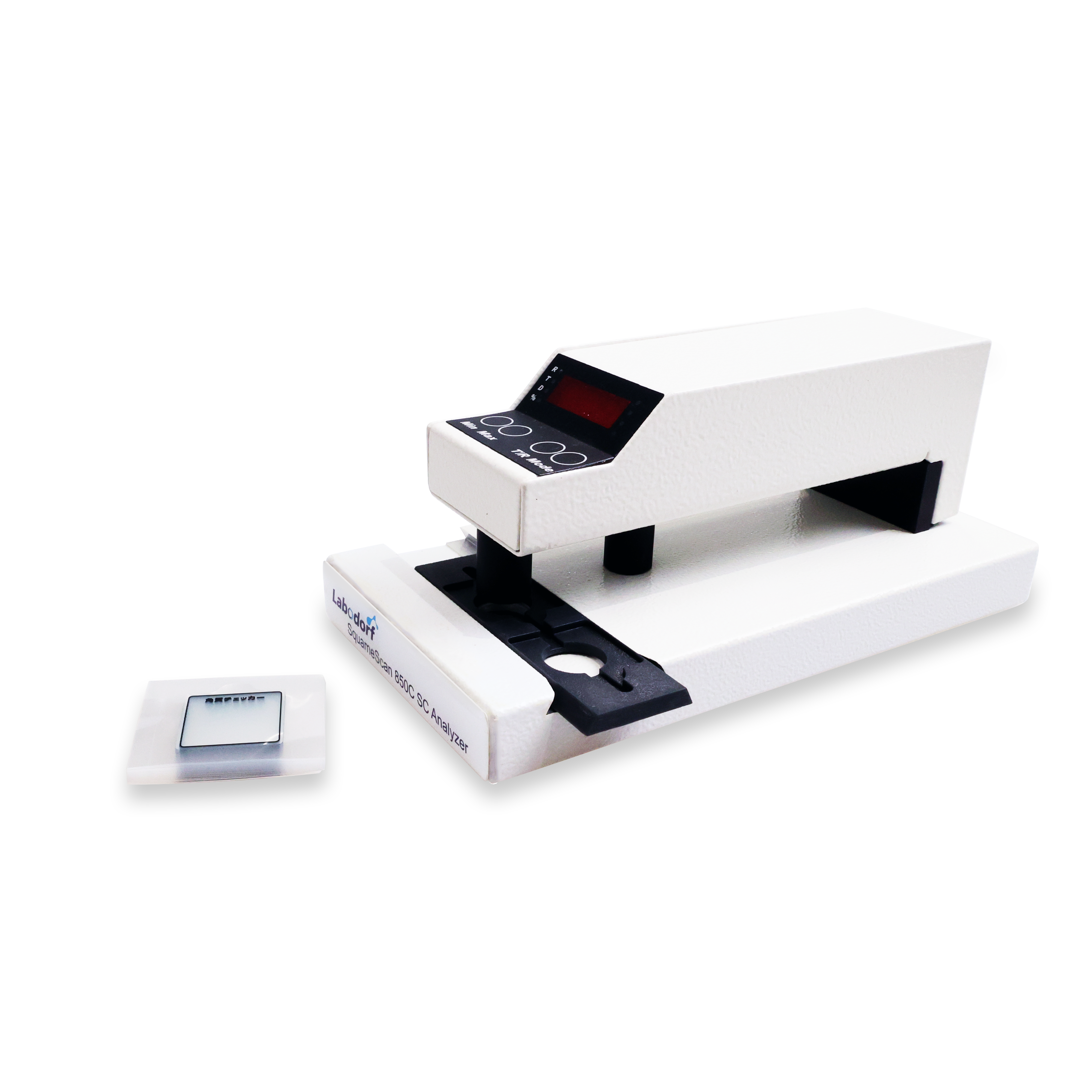
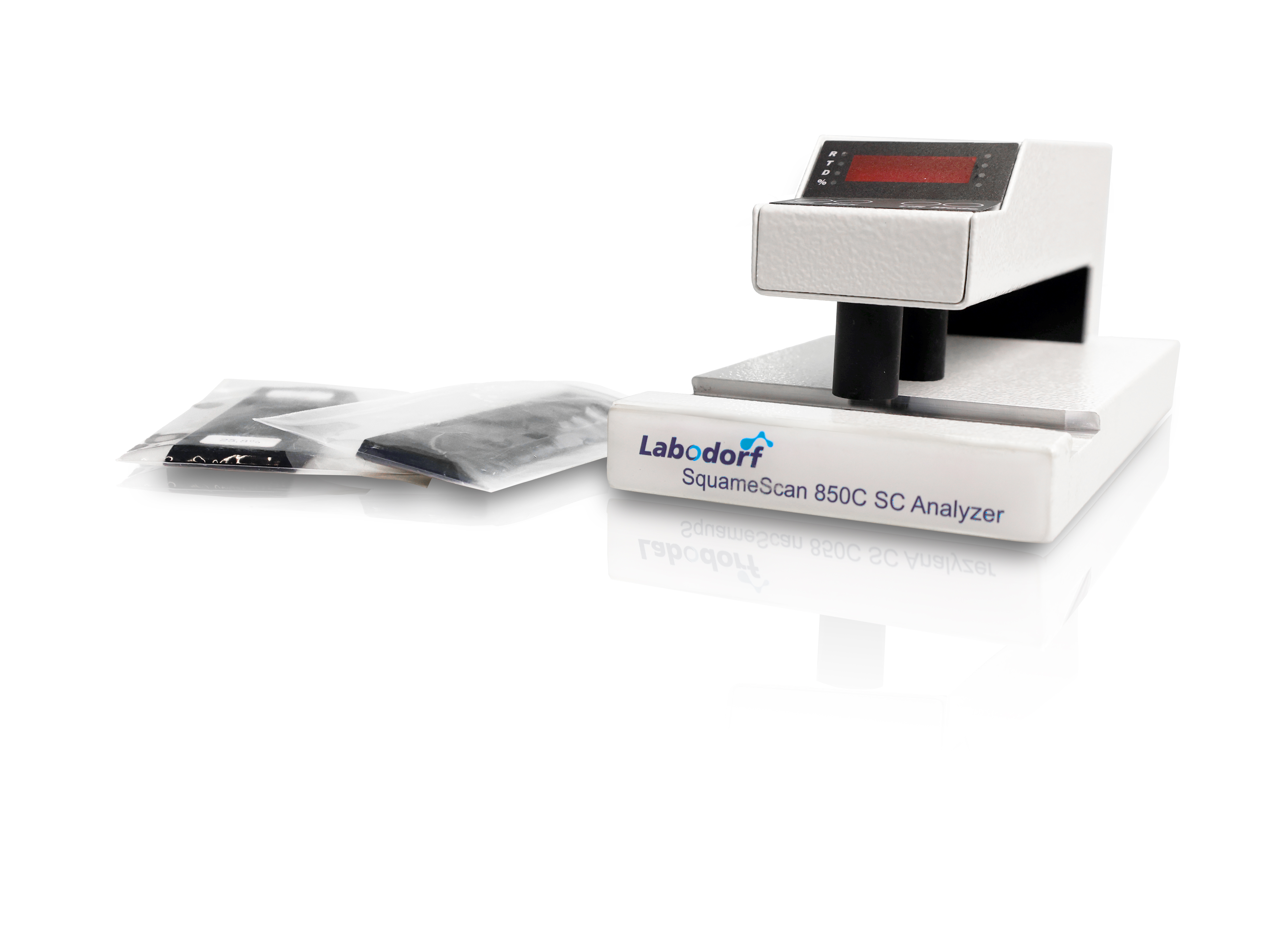

Essential details
MOQ:1
Shipping:express delivery
Specification Number:850C
Product Introduction
The Labodorf Stratum Corneum Content Analyzer uses infrared light (approximately 850 nm) to measure optical absorbance for indirect quantification of stratum corneum content on adhesive tape strips. Each measurement takes only a few seconds. After measurement, the tape strips can be used for other biological tests, allowing researchers to obtain more data from the same sample. It is widely used in dermatological research, cosmetic development, and new drug R&D.
Working Principle
Using a circular 850 nm infrared beam, the instrument measures the reduction in light intensity (as a percentage relative to the initial 100% air intensity) over a 13 mm diameter area on tape strips containing stratum corneum. The large measurement area compensates for uneven distribution of corneocytes.
Compared with 430 nm measurement, the 850 nm wavelength minimizes errors caused by molecular absorption and prevents thermal denaturation. After correcting pseudo-absorbance measured from blank adhesive tape, the pseudo-absorbance (%) is converted to stratum corneum mass (μg/cm²) per strip, which can be further converted to stratum corneum thickness (μm) removed per tape strip.
Features
- Quantitative stratum corneum measurement via 850 nm infrared absorbance.
- Rapid measurement: only a few seconds per tape strip, saving analysis time.
- Wide applicability: tape strips reusable for other biological tests after measurement.
- User-friendly: compact size and simple operation.
- Data transmission: equipped with USB port for data transfer to PC for efficient recording and analysis.
Applications
- Pharmaceutical formulation optimization: Understand drug distribution in skin to improve bioavailability.
- Real-time tape stripping monitoring: Adjust stripping times based on sample conditions.
- Improved drug delivery efficiency: Optimize transdermal drug delivery systems (TDS).
- Drug safety assessment: Support EU REACH regulation compliance.
- Experimental standardization: Ensure consistent and comparable results across labs.
- Improved clinical trial accuracy: Provide reliable data for drug approval.


