


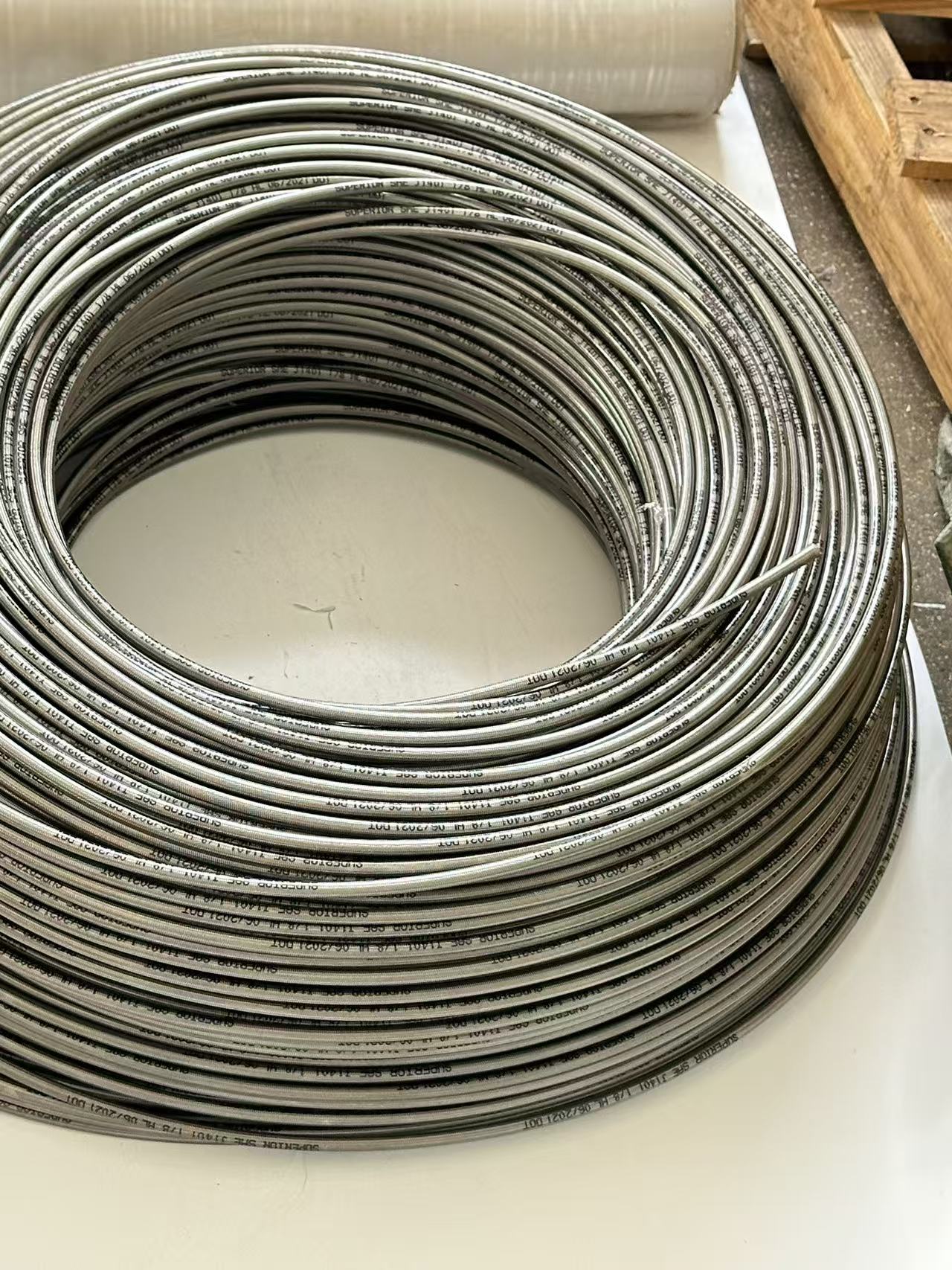


1️⃣ What is a PTFE stainless steel braided hose?
A PTFE hose is a high-performance flexible hose with an inner layer made of polytetrafluoroethylene (PTFE) and an outer layer reinforced with stainless steel wire braid. It offers excellent heat resistance, pressure resistance, and chemical stability, making it ideal for automotive, chemical, pharmaceutical, and aerospace applications.
2️⃣ What are its advantages compared with rubber or nylon hoses?
-
✅ Wide temperature range: Operates continuously from -70°C to +260°C.
-
✅ Excellent chemical resistance: Resistant to almost all chemicals and fluids.
-
✅ High pressure capability: Stainless steel braid withstands up to 20–30 MPa working pressure.
-
✅ Low friction coefficient: Smooth inner wall ensures low flow resistance and no scaling.
-
✅ Long service life: Superior aging resistance and lower maintenance cost than rubber hoses.
3️⃣ What are the main applications?
-
🚗 Automotive brake systems
-
🚘 Power steering systems
-
❄️ Engine cooling and thermal management systems
-
⚙️ Fuel and lubricant transfer lines
-
🏭 Industrial and chemical fluid transfer
4️⃣ What structure types are available?
-
Single-layer PTFE inner tube
-
Stainless steel braided reinforcement layer
-
Optional outer protective layer (nylon or rubber cover)
-
Fittings available in crimped, stainless-steel threaded, quick-connect, or flange types
5️⃣ Is the PTFE hose suitable for OEM applications?
Yes.
We design and test according to OEM standards, supporting customized dimensions, pressure ratings, fitting types, and surface treatments to meet both OEM and aftermarket requirements.
6️⃣ Do you provide customization and testing services?
Yes.
-
🧩 Custom length, diameter, and fitting types available based on drawings or samples.
-
📏 Tests include burst pressure, working pressure, temperature resistance, bending fatigue, and salt-spray testing.
-
📄 Material certificates, inspection reports, and compliance certifications (SAE J1401 / ISO standards) can be provided.
7️⃣ What are the storage and usage precautions?
-
Avoid excessive bending or stretching.
-
Keep away from sharp edges or strong chemical solvents.
-
Store in a cool, dry place, away from direct sunlight.
-
Periodically check fitting tightness and outer braid wear.